Kalpavriksha
The wish-fulfilling tree.
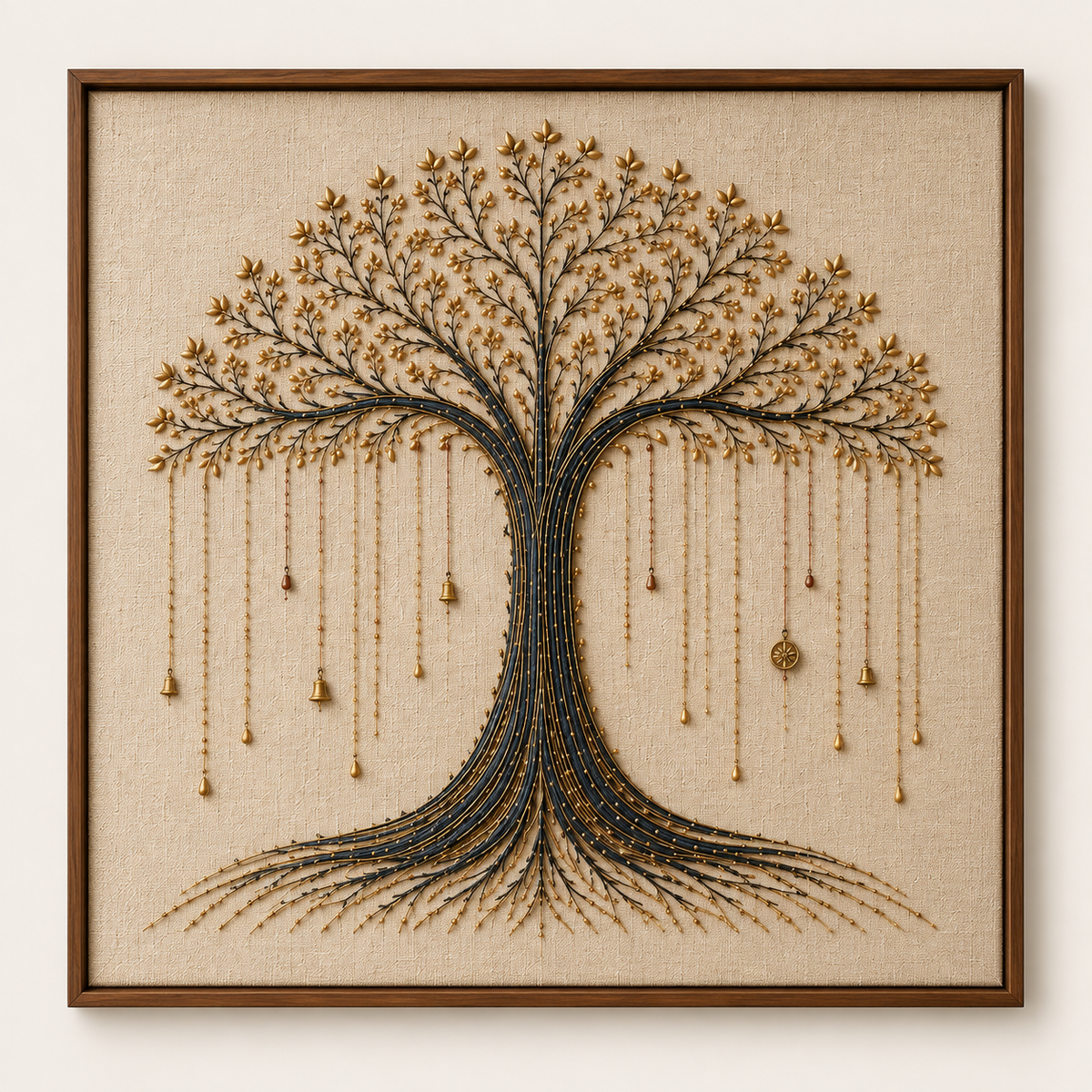
A hand-embroidered work inspired by Kalpavriksha, known as the tree of wishes and abundance, conceived by Tamiesh and brought to life through traditional Indian embroidery.
A tree of abundance, drawn in thread.
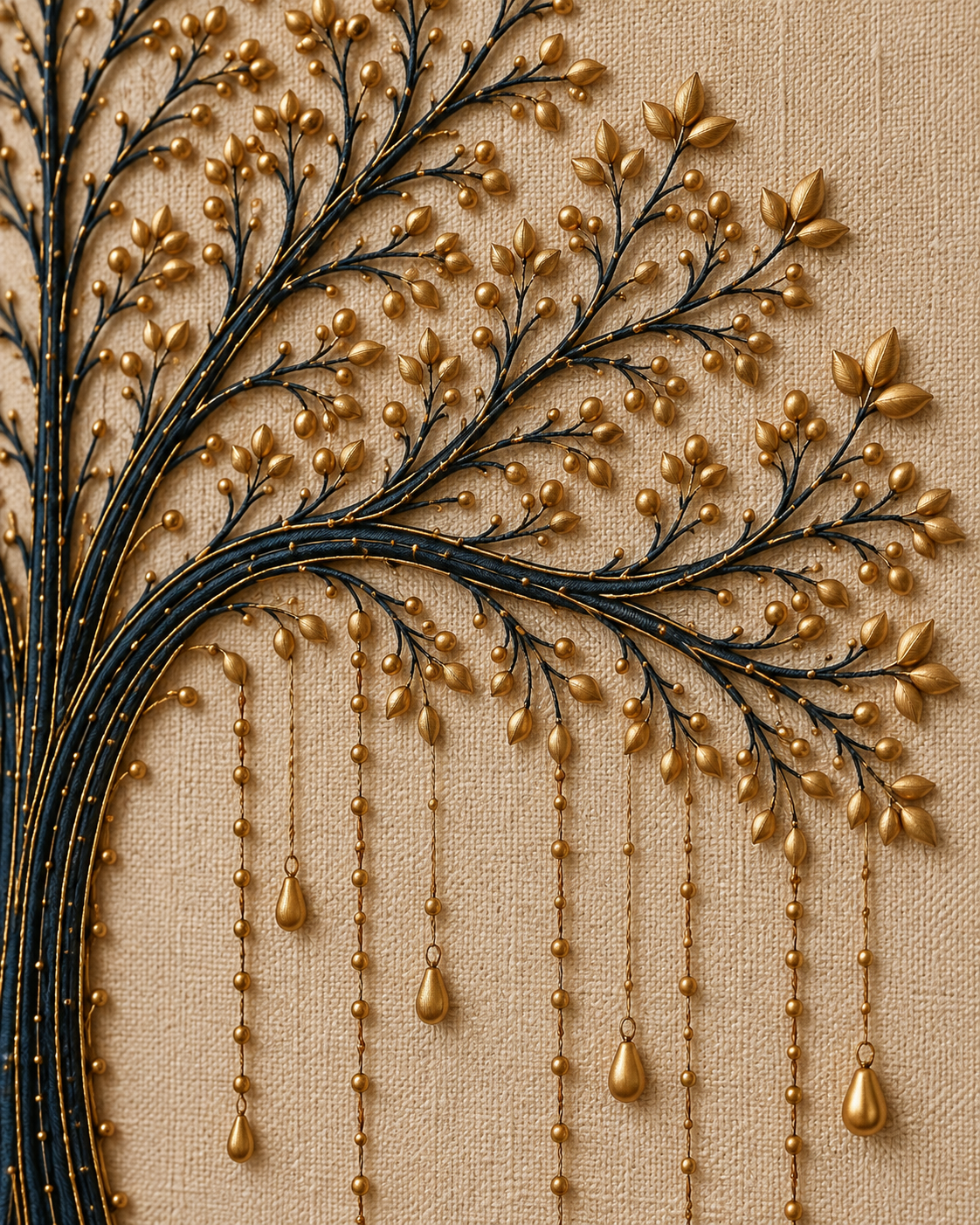
Come closer, and hundreds of branches, leaves and suspended details begin to appear.
Made to live with.
That gives the work a particular place in the home.
Not simply something to look at.
Something whose meaning you choose to keep around you.
As per tradition, Kalpavriksha is known as the wish-fulfilling tree, associated with abundance, prosperity and the fulfilment of desires.
A tree associated for generations with the possibility that what is sought may eventually find its way to you.
Kalpavriksha carries that idea quietly into the room.
What was the artist thinking?
The artist kept returning to the idea of a tree believed to fulfil wishes.
Kalpavriksha has been mentioned and represented across old Indian accounts and traditions, yet it is an idea many people today know very little about.
That fascinated him.
Something this extraordinary had survived across generations, yet had become far less visible in everyday life.
He wanted to bring it forward again.
Not as a literal illustration, but as something that could live naturally in a contemporary home.
The spreading branches became central to the composition.
One trunk divides.
Then divides again.
Until the tree seems almost endless.
Small details hang beneath the canopy like possibilities waiting to reveal themselves.
The intention was to create more than an image of a tree.
A presence associated with abundance, possibility and wishes fulfilled.
Hundreds of branches. One stitch at a time.
They are evidence of the hand.
The work is built slowly from the trunk outward.
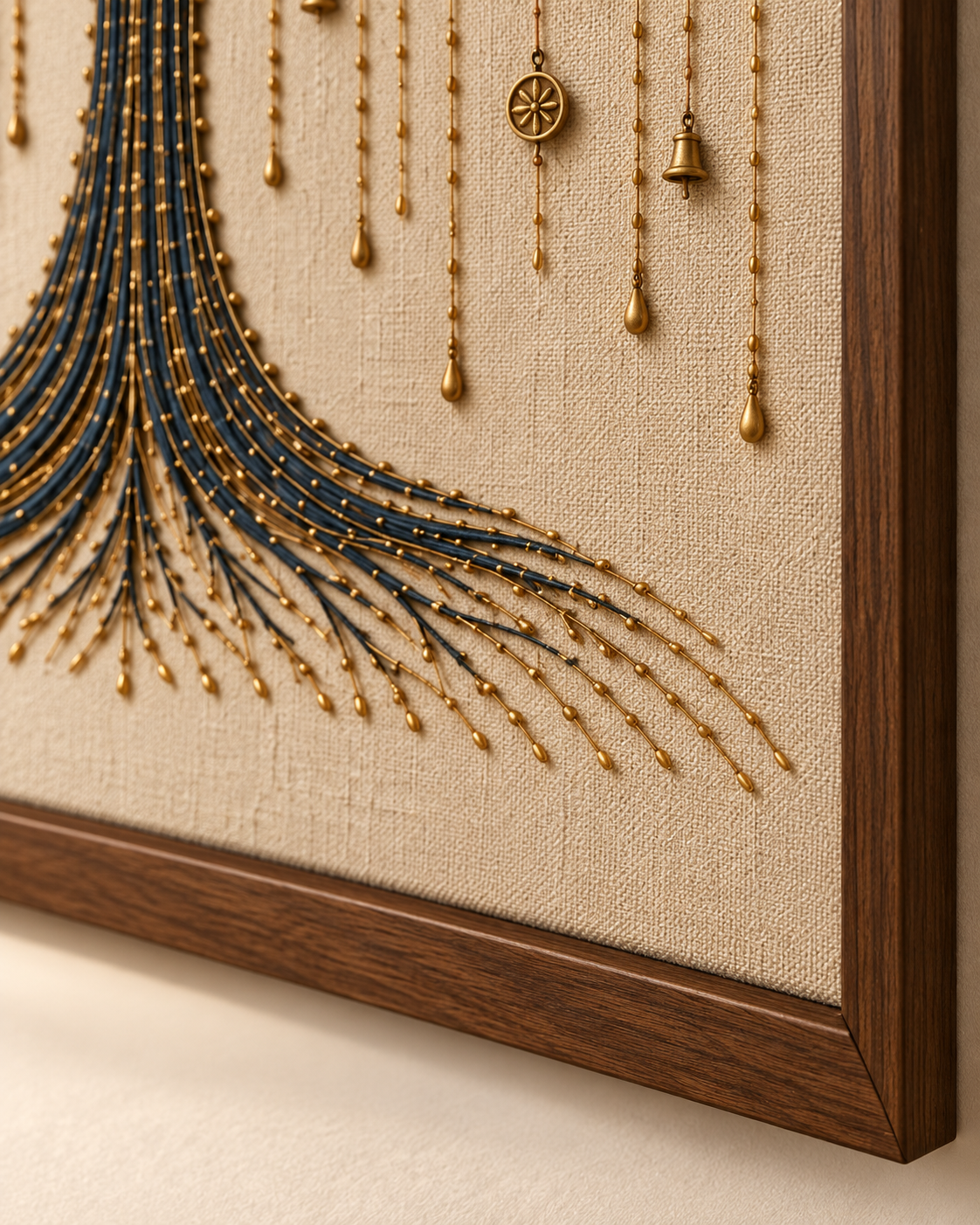
Deep Neela thread gives the tree its structure.
Muted antique-gold embroidery moves through the branches, leaves and details beneath the canopy.
Traditional Indian embroidery techniques create slight variations in line, height and texture across every work.
Those differences remain.
They are evidence of the hand.
What appears from a distance as one tree is, up close, hundreds of individual decisions made in thread.
The tree that grants what is sought.
As per tradition, Kalpavriksha is the wish-fulfilling tree.
It is associated with extraordinary abundance and with the fulfilment of desires.
In accounts of the Samudra Manthan, Kalpavriksha is among the extraordinary treasures said to emerge from the churning of the ocean.
Over time, the tree became an enduring symbol of prosperity, plenty and wishes coming to fruition.
Perhaps that is why the image has survived for so long.
The desire behind it is still familiar.
To hope for something.
To ask for it.
And to believe there may be enough possibility in the world for it to arrive.
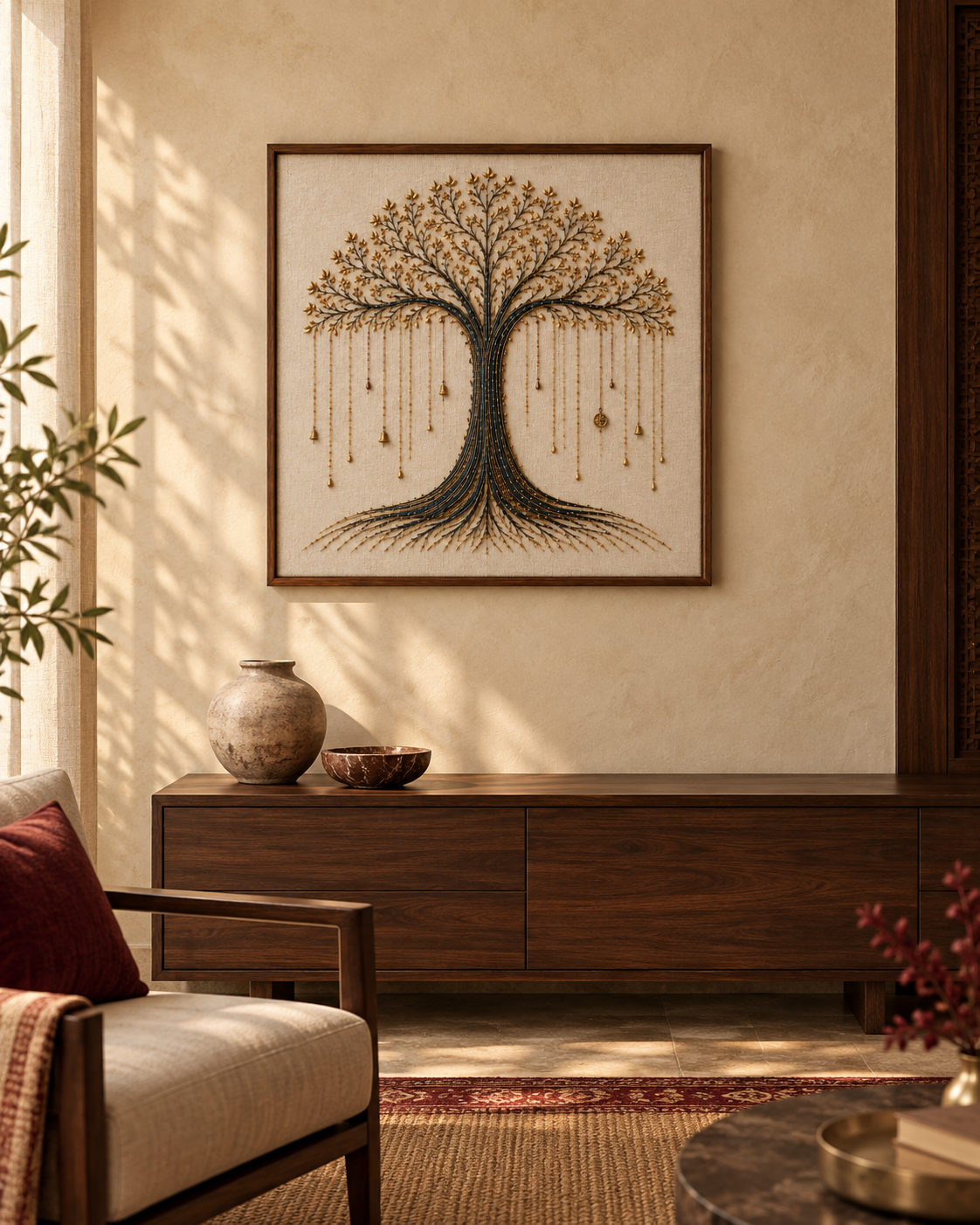
Let the tree have the room.
Kalpavriksha was conceived to have presence.
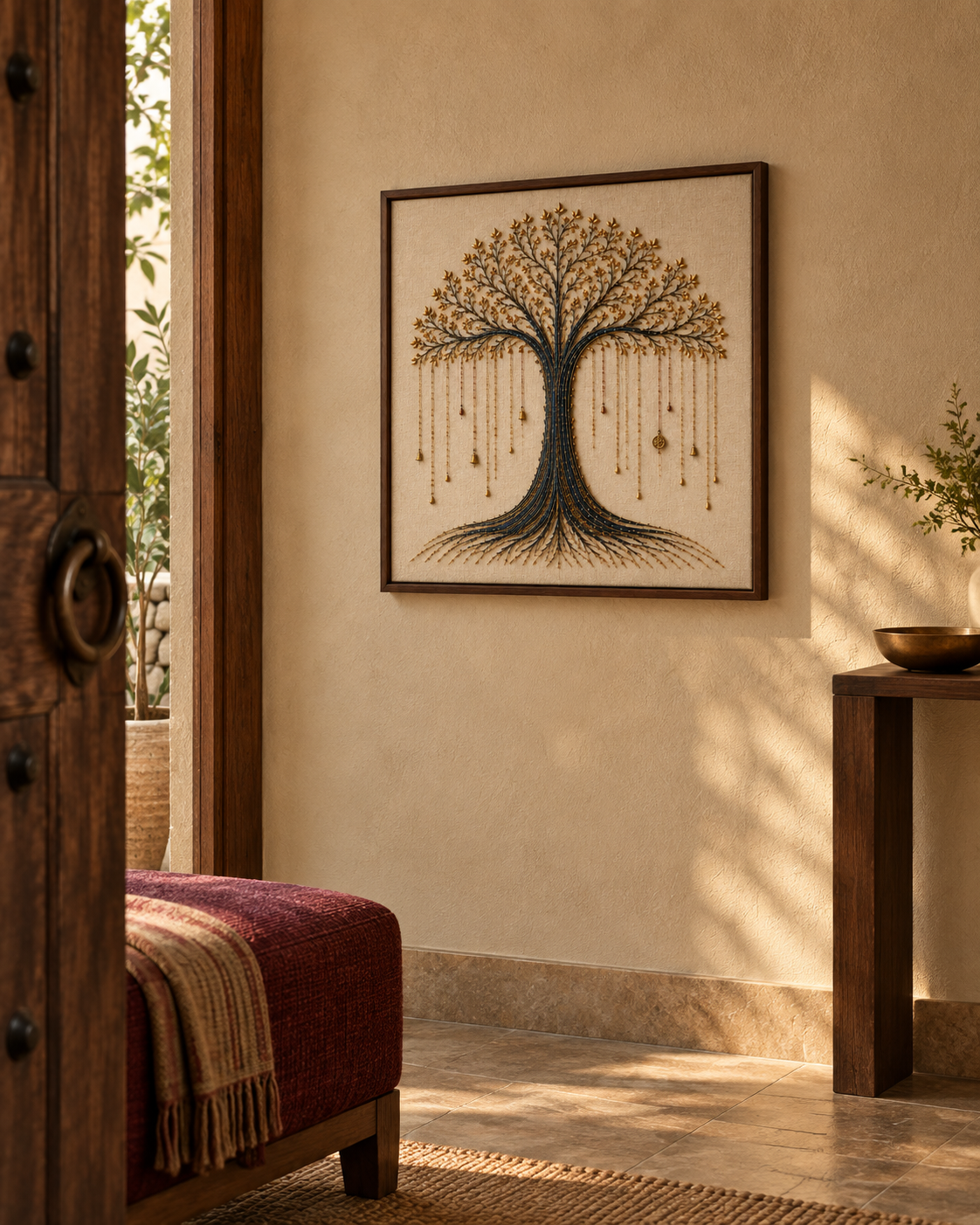
Place it where the tree can be seen in full: a living room, entrance, dining space, study or another important wall in the home.
From a distance, the silhouette holds the room.
Closer, the embroidery begins to reveal itself.
And behind the work sits the older idea it carries:
the wish-fulfilling tree, brought into the home.
Not hidden away.
Not treated as a small decorative motif.
Almost as though the tree itself has taken root there.
Before you acquire.
Frequently asked
Find out more about Kalpavriksha.
Each Kalpavriksha is individually numbered and recorded by Vedras. The work arrives framed, with its Certificate of Authenticity and edition details recorded as part of the Vedras archive.
No. Once the final work is placed, the edition closes and Kalpavriksha will not be made again in this form. The edition size will be confirmed before acquisition opens.
Display it away from direct moisture and harsh sunlight. The work is made to live in a home, but the textile, embroidery and frame should be treated with the care given to an artwork.
Kalpavriksha works particularly well in spaces where it can have visual presence: the living room, entrance, dining area, study or a prominent passage. Rather than fitting it into a crowded gallery wall, give the tree enough space around it to be seen as a complete form.
As per tradition, Kalpavriksha is associated with abundance, prosperity and the fulfilment of wishes. For someone who values the meaning carried by the things they live with, the work offers more than visual beauty. It brings one of India's enduring symbols of possibility into everyday life.
Kalpavriksha is traditionally known as the wish-fulfilling tree. Vedras does not promise a particular outcome from owning the work. Its significance comes from the belief and symbolism the tree has carried across generations: abundance, prosperity, possibility and wishes coming to fruition.
As per tradition, Kalpavriksha is associated with abundance, prosperity, fulfilment and the granting of desires. This is the meaning that gives the tree its enduring place in Indian cultural memory.
Kalpavriksha makes a particularly meaningful gift for someone beginning a new chapter. A wedding. A new home. A new business. An anniversary. A significant birthday or milestone. The sentiment behind the gift is simple: may there be abundance in what comes next.
Yes. Because of its association with abundance, prosperity and wishes fulfilled, Kalpavriksha carries a particularly appropriate meaning for a new home. It also avoids becoming a conventional ceremonial gift. It is something intended to remain part of the home long after the occasion has passed.
Yes. For questions about the edition, placement, gifting or acquisition, write to Vedras and we will respond directly.